
News
‘1,000 Children May Die Daily’ – Save the Children Raises Alarm Over Hunger Crisis


A recent study by Save the Children International has warned that over 96,000 children could die from acute malnutrition in six northern states before the end of 2025, raising fresh concerns about the failure of government at all levels to protect vulnerable citizens.
The organisation released the alarming projection at a press conference in Abuja, with representatives from PLAN International, Action Against Hunger Nigeria, Oxfam, and other partners in attendance.
Save the Children listed the affected states as Adamawa, Borno, Katsina, Sokoto, Yobe and Zamfara.
Country Director of Save the Children, Duncan Harvey, said the situation could become catastrophic if urgent lifesaving interventions are not provided.
According to him: “Without urgent access to lifesaving treatment, the states could lose 96,000 children to death between October and December 2025 due to acute malnutrition.”
He explained that the projection means over 1,000 children may die every single day within the last quarter of the year.
Harvey added that about 800,000 pregnant and breastfeeding women in the same states face similar risks of acute malnutrition.
Harvey further warned that Nigeria is already battling the world’s largest food crisis, stating:
“Nigeria is facing a nationwide emergency due to escalating challenges of food insecurity and malnutrition; with more than 31 million people facing acute food insecurity in 2025.”
He disclosed that:
- 5.4 million children are currently malnourished nationwide.
- 3.5 million children under five suffer Severe Acute Malnutrition (SAM).
- 1.2 million children require immediate lifesaving treatment.
Between October and December 2025 alone, 600,000 children under five in the six states will be at risk of SAM.
He also reminded governments of the 2010 AU declaration marking October 30 as Africa Food and Nutrition Security Day to encourage action against hunger.
Harvey emphasised: “Hunger is not just a risk; it’s a crisis of rights. Food security and nutrition must be treated as non-negotiable for child survival.”
Country Director of Action Against Hunger Nigeria, Thierno Samba Diallo, stressed the need for immediate investment in proven nutrition commodities.
He said: “Funds should be made available for lifesaving nutrition commodities like Ready-to-Use Therapeutic Food (RUTF) and therapeutic milk, locally produced and proven to save lives.”
Diallo said malnutrition carries irreversible impacts on physical growth, cognitive development and national productivity, adding that both long-term funding and nexus approaches linking humanitarian, peace and development interventions were needed.
He urged governments to:
- Expand targeted support for 800,000 pregnant and breastfeeding women.
- Adopt shock-responsive safety nets to shield poor households.
- Scale up food assistance, nutrition treatment and livelihood support.
- Encourage local production of fortified foods.
- Strengthen cadre harmonisation and integrate phase classification analysis for informed response.
Director of Programme Quality and Influencing at PLAN International, Dr Helen Idiong, urged federal and state authorities to collaborate with humanitarian partners.
She said: “Hunger is not just a lack of food. It’s a violation of dignity, health and the right to the future. No child should die from malnutrition, hunger or illness. These are preventable, treatable and solvable.”
Idiong insisted that food and nutrition security must be viewed as a non-negotiable right.
Nigerians Fear Crisis May Spread Beyond Six States
The report has sparked nationwide debate, with many Nigerians arguing that the malnutrition crisis could extend beyond the six listed states.
They warned that states in the North-Central, including Benue, Plateau, Niger, Kogi and parts of Kaduna—face similar risk due to rising violence, displacement of farming communities and growing food scarcity.
‘Banditry Has Made Farming Impossible’ – Middle Belt Forum
President of the Middle Belt Forum (MBF), Dr Pogu Bitrus, said Nigeria does not need international bodies to confirm rising malnutrition.
According to him: “Banditry has reached a stage where farmers can’t go to farm. And when children can’t feed properly, the resultant effect is malnutrition and death.”
He warned that the problem extends far beyond the six states listed: “There are so many other areas where bandits do not allow farmers to go to farm. There will be devastating hunger unless government takes proactive action.”
An educationist in Maiadua, Katsina State, Abdullahi Umar, said insecurity has extended food shortages from a seasonal problem to a year-round crisis.
He explained: “Ordinarily, states like Zamfara, Katsina and Sokoto experience food shortage around June/July. But insecurity has made it an all-year problem. Terrorists and kidnappers don’t allow people to go to farm.”
He lamented that removal of fuel subsidy has worsened the cost of living, adding: “Government should take the war to bandits and kidnappers, clear them from the forests and bushes, and allow farmers back to the farm.”
Umar urged state governments to distribute food and children’s supplements immediately and advised other states not listed to prepare ahead.
A lawyer and public affairs commentator, Nnanna Nwkamma, said many families are unable to feed due to harsh economic policies.
He argued: “Ninety percent of hardship in the country today is attributed to subsidy removal. Then look at the issue of taxation; it is crazy.”
Nwkamma warned that many households in the affected states — and even beyond — cannot afford basic nutrition.
He pointed out: “A can of NAN baby food that used to sell at a little above ₦1,000 now sells for ₦10,000 or more. Why won’t there be malnourished children?”
He emphasised that the crisis affects both the North and the South, saying: “Many families are feeding from hand to mouth. There is no food anywhere. The economy is very hard.”
He urged the government to provide food and children’s supplements to poor households at no cost or subsidised rates and declare total war on bandits and kidnappers.
He said, “Apart from having enough food for everybody, farmers will also become economically viable to provide the kind of food that nourishes children.”


Authorities in Saudi Arabia have declared Friday, March 20, 2026, as the day for the celebration of Eid al-Fitr following the non-sighting of the crescent moon.
The announcement was made on Wednesday via the official HaraminInfo social media platforms, which provide updates on religious developments in the Kingdom.
According to the statement, efforts to sight the crescent moon across designated locations in the Kingdom were unsuccessful due to unfavourable weather conditions.
“The crescent moon has NOT been sighted in Saudi Arabia. Therefore, #EidAlFitr will be celebrated on Friday, 20th March 2026,” the statement read.
The platform also offered prayers for Muslims as the holy month of Ramadan draws to a close.
“May Allāh allow us to utilise the remaining moments of this blessed month to engage in that which pleases Him, may He accept our siyām, qiyām & a’māl and may He allow us to witness many more Ramadāns in good health. Āmīn,” it added.
Saudi authorities explained that observations were conducted across multiple locations, from Dammam—identified as the first city in the Kingdom where the crescent moon is usually sighted—to Tabuk, regarded as the last observation point.
However, persistent cloud cover and rainfall hampered visibility.
“Dammam, the first city in the Kingdom where the crescent moon of Eid al-Fitr is sighted. Tabuk – the last city in the Kingdom where the sighting ends. Until now: Cloudy conditions continue at most observation sites across the Kingdom. Rain is currently heading toward observation sites across the Kingdom,” the statement noted.
Saudi Arabia’s declaration is expected to influence several Muslim-majority countries, including Nigeria, where the official pronouncement rests with the Sultan of Sokoto.
As of the time of filing this report, Nigerians are awaiting confirmation from the Sultan regarding the sighting of the moon, which will determine the exact date for Eid-el-Fitr celebrations nationwide.
Eid-el-Fitr marks the end of Ramadan, the Islamic holy month characterised by fasting, prayers, and reflection by millions of Muslims around the world.
The festival is typically observed with prayers, charity, and communal celebrations among Muslim faithful.
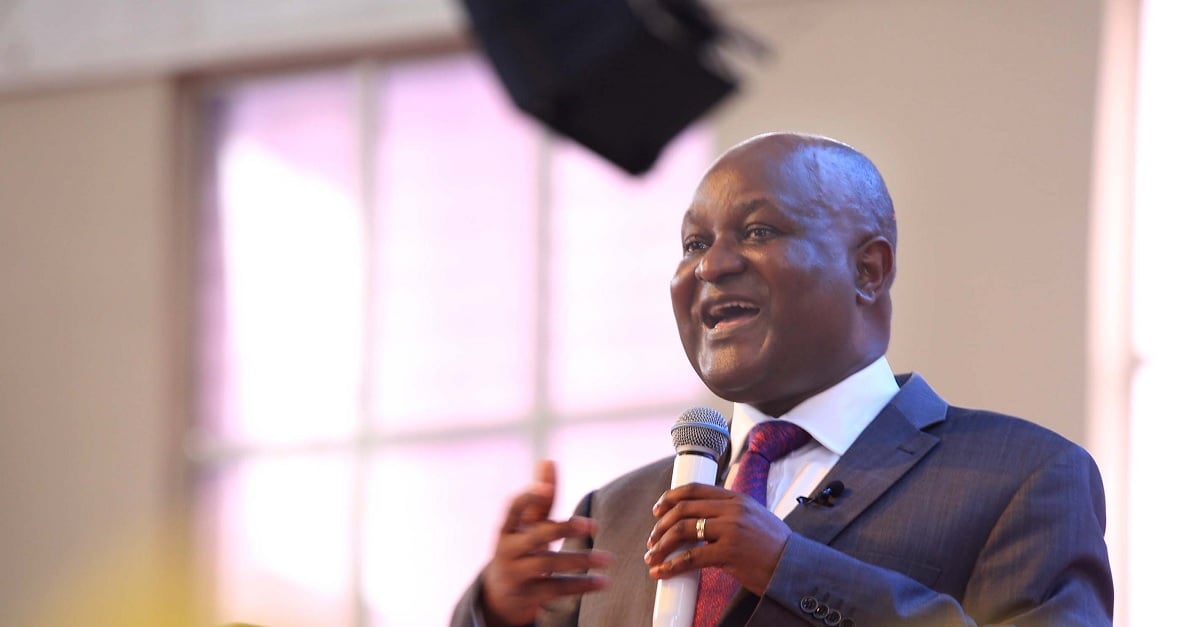
A former Deputy Governor of the Central Bank of Nigeria, CBN, Tunde Lemo, has declared his interest in contesting the 2027 governorship election in Ogun State.
Lemo made the disclosure while participating in the All Progressives Congress (APC) ward congress at Ward 12, Ita-Agemo, Isale-Igbein in Abeokuta.
The banker said his ambition was motivated by a desire to accelerate development at the grassroots and unlock the state’s agricultural potential.
According to him, Ogun State is richly endowed and requires purposeful leadership to harness its resources for the benefit of the people.
Lemo, who was received by enthusiastic party members, assured them of an inclusive government and unwavering loyalty to the All Progressives Congress.
He attributed the peaceful conduct of the ward congresses in the state to the policies under the Renewed Hope Agenda of President Bola Ahmed Tinubu.
Lemo said the exercise was aimed at consolidating unity and harmony within the party.
“I don’t want to canvass personal position here, but my presence here today is to underscore the fact that APC is an organic party. You can see the crowd, and we are members of one family. You have not seen anybody fighting. We are very strong and very vibrant, and people are happy because of the transformative agenda of President Bola Tinubu, but at the same time, we are building the base, because today we are having the ward congresses, and from there, of course, we move up to the National Congress. So I’m very, very excited that we have very loyal party members,” he said.
The former CBN deputy governor also lauded the developmental efforts of Ogun State Governor Dapo Abiodun, particularly the creation of the agro-cargo airport, which has received approval to commence commercial operations.
He noted that such projects were positioning the state for economic growth and investment.
Speaking on his political aspiration, Lemo acknowledged his interest in the 2027 governorship race, while stressing that leadership is about service and improving people’s lives.
“You all know who I am, and you know what I’ve been trying to do. But by the special grace of God, it is about governance. It’s about raising the bar and ensuring the best for our people, and that’s what we’re doing, and by the special grace of God, we will get there.
“Yes, of course, I have my eyes on 2027 just like everyone else, but everything is in the hands of God,” he added.

Former Attorney-General of the Federation and Minister of Justice, Abubakar Malami (SAN), has been taken into custody by operatives of the Department of State Services shortly after his release from the Kuje Correctional Centre, Abuja.
The former minister was reportedly arrested on Thursday after completing his bail conditions granted by a Federal High Court.
Malami was taken into custody by DSS operatives moments after leaving the correctional facility, where he had been held following his arraignment.
Although details of the arrest were yet to be officially disclosed, it was gathered that the former Attorney-General is facing a fresh investigation by the secret police.
A security source, who spoke on condition of anonymity, said the arrest was not connected to the charges for which he was earlier remanded in prison.
Investigations revealed that the new development may be linked to the alleged discovery of arms at Malami’s country home in Kebbi State.
According to findings, operatives of the Economic and Financial Crimes Commission reportedly uncovered the arms during a search of the former minister’s residence, prompting security concerns that attracted the attention of the DSS.
However, as of the time of filing this report, neither the DSS nor the EFCC had issued an official statement confirming the discovery or the nature of the alleged arms.
Recall that a Federal High Court sitting in Abuja on Wednesday granted Malami bail alongside his wife and son.
The court fixed bail at ₦500 million each, with two sureties in like sum, ordering that the sureties must be persons of verifiable means and acceptable to the court.
The former minister was said to have fulfilled the bail conditions before his release from Kuje Prison.
Prior to his rearrest, Malami had raised concerns over what he described as a plot by the DSS to re-arrest him.
In a statement issued by his Special Assistant on Media, Mohammed Bello Doka, the former Attorney-General alleged that operatives of the DSS had been carrying out surveillance around the correctional centre.
He claimed that the move was aimed at re-arresting him immediately after his release.
The statement read in part that the alleged surveillance heightened fears within Malami’s camp about possible violations of his rights, despite complying with court orders.
Background
Malami, who served as Attorney-General of the Federation from 2015 to 2023 under former President Muhammadu Buhari, has been under intense scrutiny by anti-corruption and security agencies since leaving office.
His tenure was marked by several controversial legal decisions and high-profile cases, many of which attracted public criticism and legal challenges.
In recent months, Malami has faced multiple investigations linked to alleged financial improprieties and abuse of office, although he has consistently denied any wrongdoing.
The latest arrest by the DSS further deepens the legal troubles of the former justice minister and adds another layer to the ongoing probes involving him and members of his family.