
News
Some Tinubu’s Ambassadorial Nominees Should Be In Prison – Keshi


A former Permanent Secretary in the Ministry of Foreign Affairs, Ambassador Joe Keshi, has faulted the second batch of ambassadorial nominees forwarded by President Bola Tinubu to the Senate for screening, describing many of the non-career nominees as unfit to represent Nigeria.
Keshi made his remarks on Monday during an interview on The Morning Brief, a Channels Television programme.
The ex-diplomat said while a few names on the list were commendable, the majority of the non-career nominees raised serious concerns about competence and integrity.
“I’m comfortable with some names on the list, but the truth of the matter is that the bulk of the people on the non-career list is a bit disturbing. Are these the kind of people we want to represent Nigeria?” he said.
Keshi claimed some nominees had failed woefully in previous public roles and should not be rewarded with diplomatic appointments.
“You have people who, if justice had prevailed, and if this country had been run properly, and the rules of the game were obeyed, should actually be cooling their heels in prison and not being sent out as ambassadors,” he said.
“You have people who have governed their states. They were absolute failures. They showed no leadership when they led their states, and the governors who took over from them are struggling to repair the damage they’ve done.
“Those are the kind of people being rewarded, either because they have helped you to destroy other political parties,” he added.
Keshi stressed that Nigeria’s foreign service was originally designed to be professional, merit-driven and globally competitive — a vision he said was being eroded by political patronage.
“Look, as far back as the 1960s, when the diplomatic service was established, those who set up the service, particularly the Prime Minister, were very clear about the kind of diplomatic service they wanted for Nigeria,” he explained.
“He wanted a very competent, independent foreign service. He wanted officers… well trained, able to compete favourably with their peers all over the world.
“And the first generation of those recruited into the foreign service, for a long time, met the criteria, until the politicians came and started what they are doing today.”



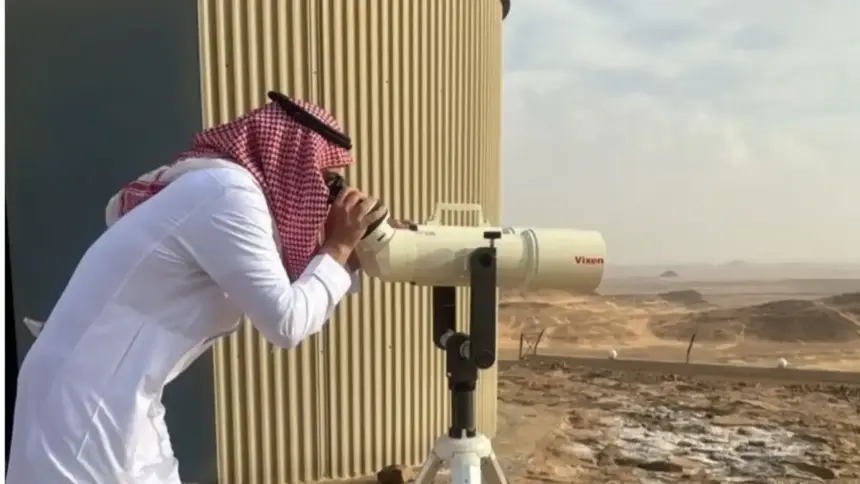
Authorities in Saudi Arabia have declared Friday, March 20, 2026, as the day for the celebration of Eid al-Fitr following the non-sighting of the crescent moon.
The announcement was made on Wednesday via the official HaraminInfo social media platforms, which provide updates on religious developments in the Kingdom.
According to the statement, efforts to sight the crescent moon across designated locations in the Kingdom were unsuccessful due to unfavourable weather conditions.
“The crescent moon has NOT been sighted in Saudi Arabia. Therefore, #EidAlFitr will be celebrated on Friday, 20th March 2026,” the statement read.
The platform also offered prayers for Muslims as the holy month of Ramadan draws to a close.
“May Allāh allow us to utilise the remaining moments of this blessed month to engage in that which pleases Him, may He accept our siyām, qiyām & a’māl and may He allow us to witness many more Ramadāns in good health. Āmīn,” it added.
Saudi authorities explained that observations were conducted across multiple locations, from Dammam—identified as the first city in the Kingdom where the crescent moon is usually sighted—to Tabuk, regarded as the last observation point.
However, persistent cloud cover and rainfall hampered visibility.
“Dammam, the first city in the Kingdom where the crescent moon of Eid al-Fitr is sighted. Tabuk – the last city in the Kingdom where the sighting ends. Until now: Cloudy conditions continue at most observation sites across the Kingdom. Rain is currently heading toward observation sites across the Kingdom,” the statement noted.
Saudi Arabia’s declaration is expected to influence several Muslim-majority countries, including Nigeria, where the official pronouncement rests with the Sultan of Sokoto.
As of the time of filing this report, Nigerians are awaiting confirmation from the Sultan regarding the sighting of the moon, which will determine the exact date for Eid-el-Fitr celebrations nationwide.
Eid-el-Fitr marks the end of Ramadan, the Islamic holy month characterised by fasting, prayers, and reflection by millions of Muslims around the world.
The festival is typically observed with prayers, charity, and communal celebrations among Muslim faithful.
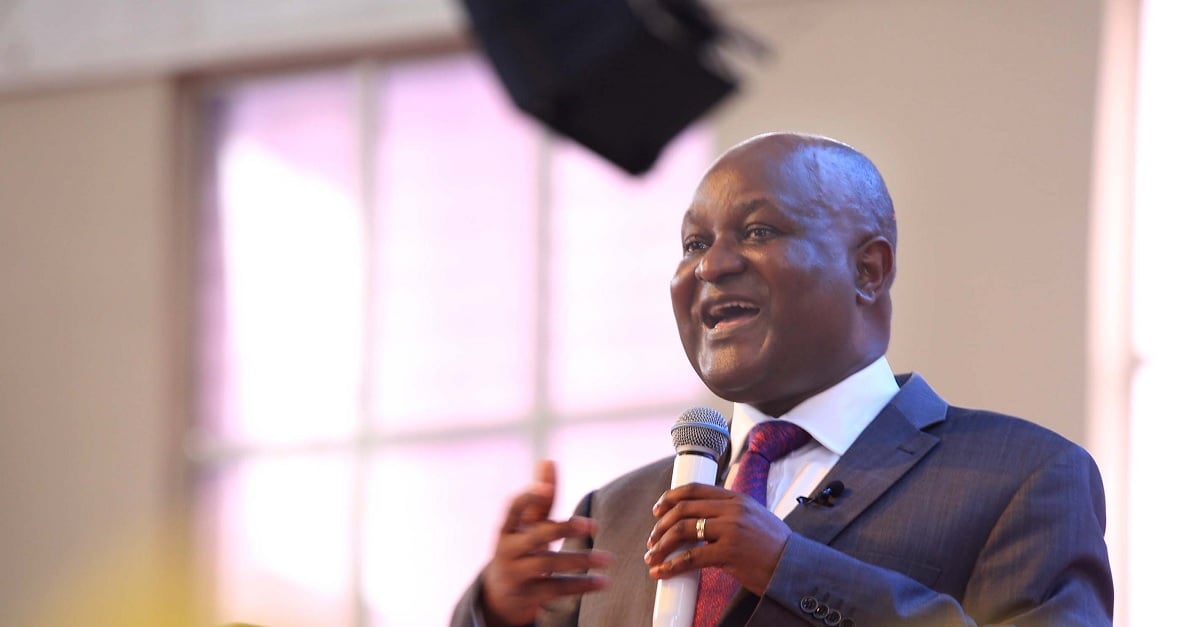
A former Deputy Governor of the Central Bank of Nigeria, CBN, Tunde Lemo, has declared his interest in contesting the 2027 governorship election in Ogun State.
Lemo made the disclosure while participating in the All Progressives Congress (APC) ward congress at Ward 12, Ita-Agemo, Isale-Igbein in Abeokuta.
The banker said his ambition was motivated by a desire to accelerate development at the grassroots and unlock the state’s agricultural potential.
According to him, Ogun State is richly endowed and requires purposeful leadership to harness its resources for the benefit of the people.
Lemo, who was received by enthusiastic party members, assured them of an inclusive government and unwavering loyalty to the All Progressives Congress.
He attributed the peaceful conduct of the ward congresses in the state to the policies under the Renewed Hope Agenda of President Bola Ahmed Tinubu.
Lemo said the exercise was aimed at consolidating unity and harmony within the party.
“I don’t want to canvass personal position here, but my presence here today is to underscore the fact that APC is an organic party. You can see the crowd, and we are members of one family. You have not seen anybody fighting. We are very strong and very vibrant, and people are happy because of the transformative agenda of President Bola Tinubu, but at the same time, we are building the base, because today we are having the ward congresses, and from there, of course, we move up to the National Congress. So I’m very, very excited that we have very loyal party members,” he said.
The former CBN deputy governor also lauded the developmental efforts of Ogun State Governor Dapo Abiodun, particularly the creation of the agro-cargo airport, which has received approval to commence commercial operations.
He noted that such projects were positioning the state for economic growth and investment.
Speaking on his political aspiration, Lemo acknowledged his interest in the 2027 governorship race, while stressing that leadership is about service and improving people’s lives.
“You all know who I am, and you know what I’ve been trying to do. But by the special grace of God, it is about governance. It’s about raising the bar and ensuring the best for our people, and that’s what we’re doing, and by the special grace of God, we will get there.
“Yes, of course, I have my eyes on 2027 just like everyone else, but everything is in the hands of God,” he added.

Former Attorney-General of the Federation and Minister of Justice, Abubakar Malami (SAN), has been taken into custody by operatives of the Department of State Services shortly after his release from the Kuje Correctional Centre, Abuja.
The former minister was reportedly arrested on Thursday after completing his bail conditions granted by a Federal High Court.
Malami was taken into custody by DSS operatives moments after leaving the correctional facility, where he had been held following his arraignment.
Although details of the arrest were yet to be officially disclosed, it was gathered that the former Attorney-General is facing a fresh investigation by the secret police.
A security source, who spoke on condition of anonymity, said the arrest was not connected to the charges for which he was earlier remanded in prison.
Investigations revealed that the new development may be linked to the alleged discovery of arms at Malami’s country home in Kebbi State.
According to findings, operatives of the Economic and Financial Crimes Commission reportedly uncovered the arms during a search of the former minister’s residence, prompting security concerns that attracted the attention of the DSS.
However, as of the time of filing this report, neither the DSS nor the EFCC had issued an official statement confirming the discovery or the nature of the alleged arms.
Recall that a Federal High Court sitting in Abuja on Wednesday granted Malami bail alongside his wife and son.
The court fixed bail at ₦500 million each, with two sureties in like sum, ordering that the sureties must be persons of verifiable means and acceptable to the court.
The former minister was said to have fulfilled the bail conditions before his release from Kuje Prison.
Prior to his rearrest, Malami had raised concerns over what he described as a plot by the DSS to re-arrest him.
In a statement issued by his Special Assistant on Media, Mohammed Bello Doka, the former Attorney-General alleged that operatives of the DSS had been carrying out surveillance around the correctional centre.
He claimed that the move was aimed at re-arresting him immediately after his release.
The statement read in part that the alleged surveillance heightened fears within Malami’s camp about possible violations of his rights, despite complying with court orders.
Background
Malami, who served as Attorney-General of the Federation from 2015 to 2023 under former President Muhammadu Buhari, has been under intense scrutiny by anti-corruption and security agencies since leaving office.
His tenure was marked by several controversial legal decisions and high-profile cases, many of which attracted public criticism and legal challenges.
In recent months, Malami has faced multiple investigations linked to alleged financial improprieties and abuse of office, although he has consistently denied any wrongdoing.
The latest arrest by the DSS further deepens the legal troubles of the former justice minister and adds another layer to the ongoing probes involving him and members of his family.